Word Count: 900 | Reading Time: 5 minutes Someone clicked your Instagram link. They were interested. Genuinely considering working with you. They landed on your website. 10 seconds later, they clicked
Word Count: 900 | Reading Time: 5 minutes
Someone clicked your Instagram link. They were interested. Genuinely considering working with you. They landed on your website.
10 seconds later, they clicked away. You never heard from them. You assumed they weren’t serious. You moved on.
They were serious. Your website just convinced them you weren’t worth the money.
This is happening multiple times per week. You’re losing qualified leads because your website is actively costing you business.
The 10-Second Test
Within 10 seconds of landing on your site, visitors need to understand:
What you offer Who you serve Why they should care What to do next
If any of these aren’t immediately obvious, they’re gone.
Most fitness websites fail this test completely. Vague headlines about “transforming lives” or “achieving potential”. Generic mission statements that could apply to any coach anywhere.
Nothing that actually tells visitors what you do or why they should choose you.
Your Value Proposition Is Buried
Someone visits your homepage. They need to understand within three seconds what makes you different from the dozens of other coaches they’re researching.
Instead, they get:
A generic headline that says nothing specific A wall of text about your journey Information about your qualifications buried somewhere No clear indication of who you actually help
By the time they scroll down looking for actual information, they’ve already mentally checked out.
“12-week body transformation programme for busy professionals who’ve tried everything else” tells someone exactly what you offer and who it’s for.
“Unlock your fitness potential” tells them absolutely nothing.
No Clear Path to Action
Someone’s convinced. They want to work with you. What do they do next?
Your call to action is buried at the bottom of the page. Or it says something vague like “Learn More”. Or there are multiple competing calls to action confusing people about what to do.
“Book Free Consultation” needs to be visible without scrolling. Repeated throughout the page. Consistent in messaging.
Every extra step between interest and action costs you clients.
Pricing Ambiguity Is Killing Conversions
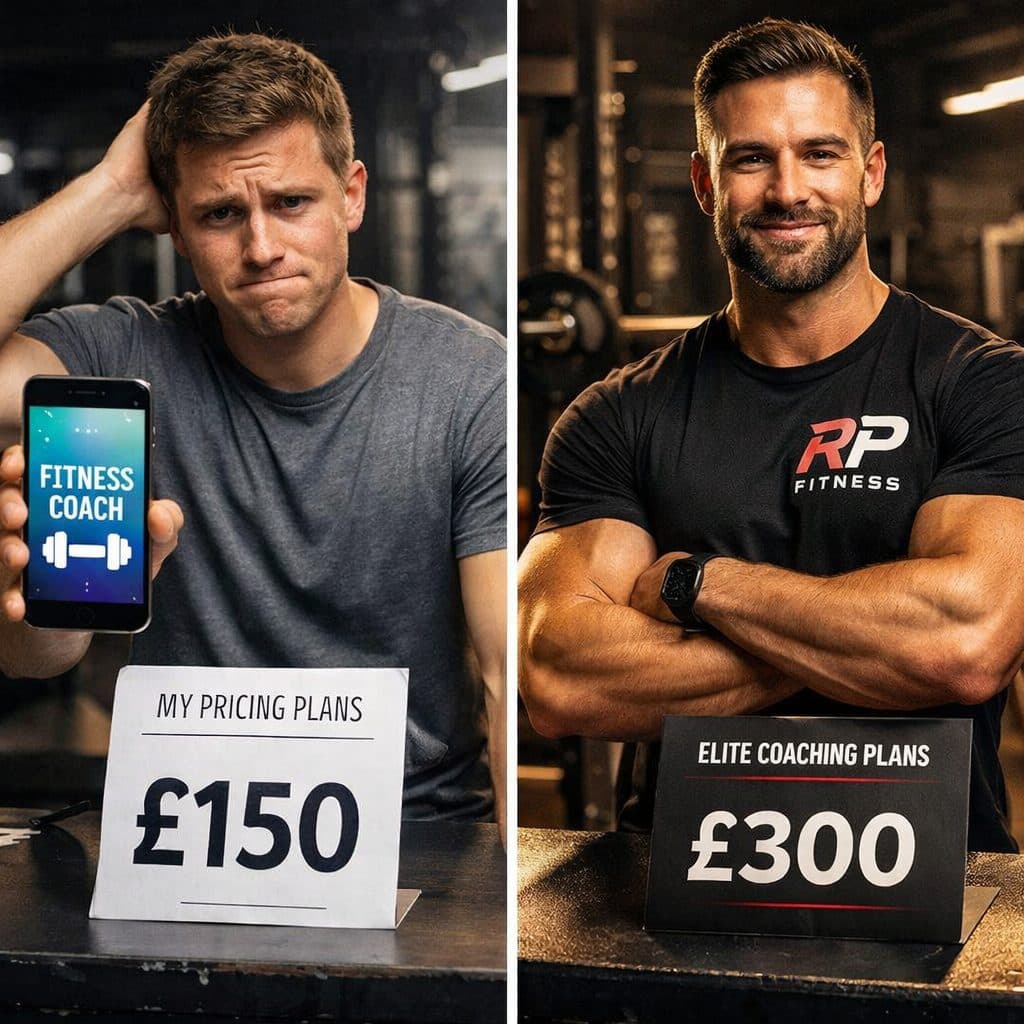
“Contact for pricing” might be the three words costing you the most business.
People want to know if they can afford you before investing time in a consultation call. Hiding pricing doesn’t create mystique. It creates friction.
You don’t need exact prices for everything. But give ranges. Show package structures. Help people self-qualify.
“Coaching packages from £200-400 per month depending on support level” lets someone know if they’re in the right ballpark. Hiding pricing just delays inevitable price discussions until after you’ve both wasted time.
Your Site Is Too Slow
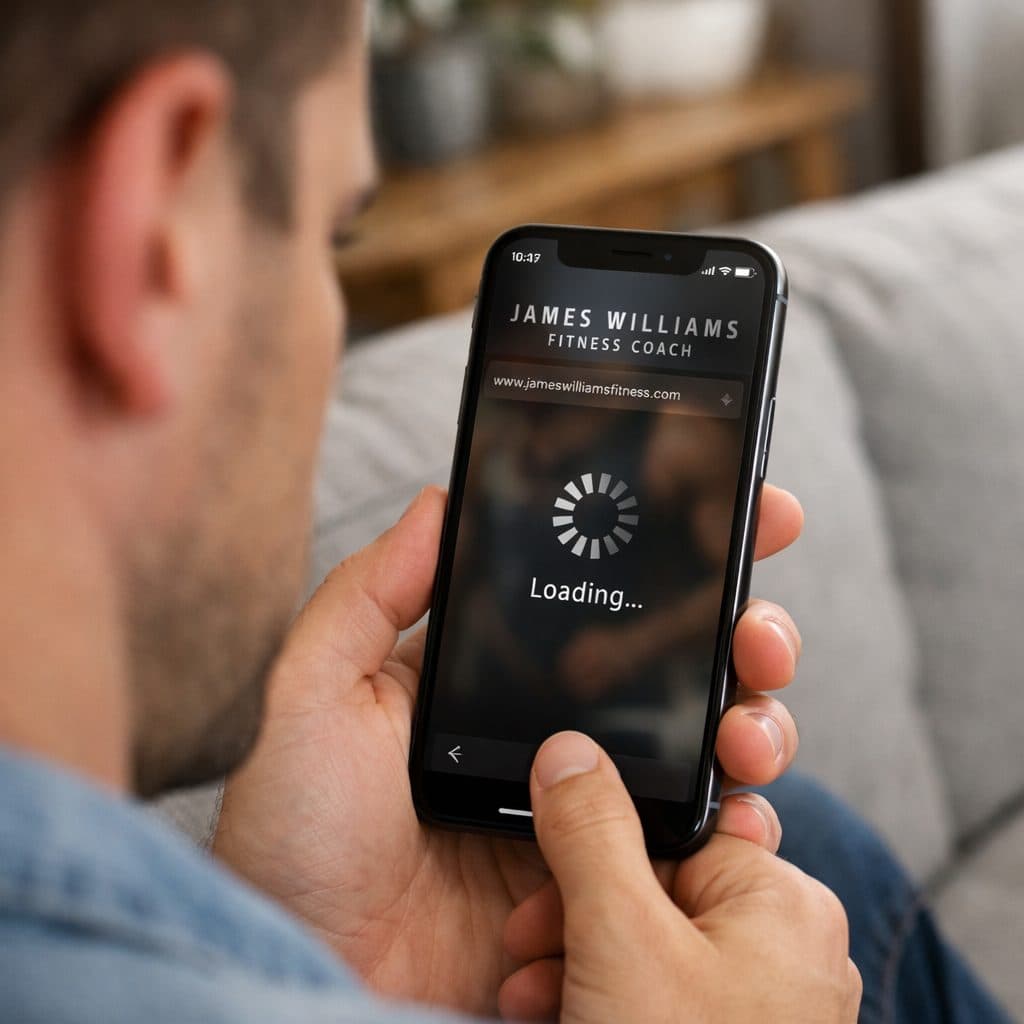
Your website takes 8 seconds to load on mobile. Most people give you 3 seconds before they bounce.
You’re losing potential clients before they even see your content. Before they read your testimonials. Before they understand what you offer.
Someone researching personal trainers has ten tabs open. If yours takes 8 seconds to load, they’ve moved to the next tab before your homepage even appears.
Fast websites keep visitors. Slow websites lose them before you get a chance.
Mobile Experience Is Costing You 70% of Visitors
Over 70% of people researching fitness services use mobile devices. If your site doesn’t work perfectly on phones, you’re losing most potential clients.
Text too small to read without zooming. Buttons too small to tap. Forms that don’t work with mobile keyboards. Images that don’t load properly.
Most fitness websites are designed for desktop and barely work on mobile. This is backwards. Design for mobile first, then adapt for desktop.
Generic Testimonials Don’t Build Trust
Your testimonials page has quotes like “Alex is amazing, changed my life!” with no context, no specifics, no credibility.
Compare that to: “Lost 3 stone in 5 months, went from avoiding mirrors to confident in a bikini, can’t thank Alex enough - Sarah, Sheffield”
One provides specific results, timeframes, emotional impact, and local credibility. The other is generic praise that could be fake.
Real results from real people with real details build trust. Generic testimonials don’t convince anyone.
Navigation Is Confusing
Someone wants to know your pricing. They shouldn’t need four clicks to find it. They want to book a consultation. There shouldn’t be a treasure hunt for the booking form.
Simple navigation. Services, Pricing, About, Contact. That’s probably enough.
Don’t hide essential information in complicated menu structures. Don’t make people work to give you money.
What a Proper Website Does
Loads in under 3 seconds on mobile devices Communicates your value proposition immediately Makes booking easy and obvious Shows transparent pricing information Displays specific testimonials with real results Works perfectly on phones and tablets Ranks on Google with proper SEO Actually converts visitors into paying clients
These aren’t optional extras. They’re essential foundation elements that determine whether your site makes you money or costs you business.
The Actual Numbers
If your website converts at 2% instead of 5%, you’re losing 60% of potential clients who were already interested enough to visit your site.
100 website visitors per month at 2% conversion: 2 clients 100 website visitors per month at 5% conversion: 5 clients
That’s 3 additional clients per month at £200 each. £600 monthly recurring revenue. £7,200 annually. Multiple years of lifetime value.
All from having a website that actually works.
We’ve Built Over 200 Websites for Fitness Professionals
We know what works because we’ve done this hundreds of times. We know what questions your potential clients have. We know what objections come up. We know what makes someone book versus click away.
Four-time award-winning web design. Based in Sheffield. Working with coaches, PTs, and gym owners across the UK and US.
Stop losing clients to websites that don’t work. Sort yours out properly.